


You'll find that a crime scene tells a story, but only if you know how to interpret its complex language. Each detail, from a displaced carpet fiber to a partial fingerprint, serves as an essential piece of evidence that can make or break a case. As you examine the systematic approach to processing these sensitive locations, you'll discover how modern forensic techniques, combined with time-tested methods, transform chaotic aftermath into clear, scientific narratives that lead investigators to the truth.
Key Takeaways
- Crime scenes must be immediately secured with barrier tape and controlled access to preserve evidence integrity and prevent contamination.
- Physical evidence includes biological materials (blood, hair), trace evidence (fibers, soil), and pattern evidence (blood spatter, tool marks).
- Proper documentation through photographs, sketches, and detailed notes is essential for accurately recording the scene and evidence locations.
- Chain of custody ensures evidence remains admissible in court by tracking every person who handles items from collection through storage.
- Advanced technologies like 3D scanning, DNA profiling, and digital reconstruction help analyze evidence and recreate crime scene events.
First Response: Securing the Scene
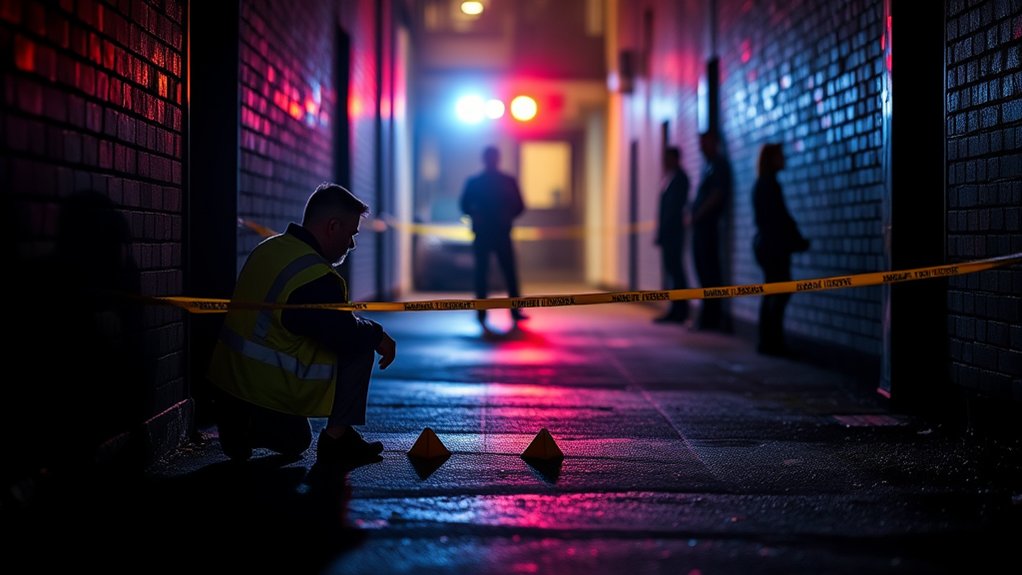
When law enforcement arrives at a crime scene, their immediate priority is establishing a secure perimeter to prevent contamination and preserve evidence. You'll need to set up barrier tape and establish inner and outer perimeters, ensuring unauthorized personnel can't access the area.

During the initial response, you must document who's present at the scene and maintain a log of everyone entering or exiting. You'll want to identify and separate witnesses, victims, and potential suspects. Scene preservation requires you to protect physical evidence from weather, foot traffic, and other environmental factors.
If you're first on scene, you'll need to assess for safety hazards and medical emergencies before proceeding with security measures. Remember that proper documentation starts the moment you arrive, so you'll want to note initial observations and any emergency actions taken. Additionally, the thrill derived from exploring desires can sometimes parallel the intense emotions involved in crime scene investigations.
Types of Physical Evidence

Physical evidence at crime scenes falls into two broad categories: transient and persistent. You'll need to document transient evidence quickly as it can change or disappear, while persistent evidence remains stable for collection and analysis.
| Evidence Type | Examples | Analysis Method |
|---|---|---|
| Biological | Blood, saliva, hair | DNA testing |
| Trace | Fibers, soil, glass | Microscopy |
| Pattern | Blood spatter, tool marks | Photography |
| Impression | Fingerprints, footwear | Digital imaging |
When processing the scene, you'll encounter both class and individual evidence. Class evidence shares characteristics with similar items, while individual evidence, like fingerprint analysis results, can be unique to one person. Blood spatter patterns often provide vital information about event sequences, while trace evidence connects suspects to locations.
Photography and Documentation Methods


Crime scene photography serves as the foundation of systematic evidence documentation. You'll need to capture overall, midrange, and close-up shots to establish spatial relationships and detail. When you're working a scene, you must photograph evidence in place before collection, guaranteeing you've documented its original position and condition.
You'll apply specific photographic techniques including proper lighting, scale placement, and perpendicular positioning for measurement photos. Your documentation should include benchmark photos that establish fixed reference points within the crime scene. You'll need to maintain a photo log detailing each image's content, location, and camera settings.

Digital photography has revolutionized crime scene documentation, allowing you to review images instantly and guarantee you've captured all necessary details before leaving the scene.
Evidence Collection Techniques
When collecting evidence from a crime scene, you'll need to follow systematic documentation procedures to maintain its integrity and admissibility in court. You must photograph and record each piece of evidence in its original position, assign it a unique identifier, and note its exact location using measurements and sketches. You'll then need to establish and maintain a clear chain of custody by recording every transfer and storage location of the evidence from collection through analysis and final disposition.
Proper Documentation Methods
Successful evidence collection at crime scenes requires four essential documentation methods: photography, sketching, note-taking, and video recording. You'll need to implement proper documentation techniques to guarantee evidence verification and maintain chain of custody.
When documenting a crime scene, follow these critical steps:
- Capture overall, mid-range, and close-up photographs of evidence in its original position before collection
- Create detailed sketches showing measurements, spatial relationships, and evidence locations using compass directions
- Write thorough notes describing weather conditions, lighting, evidence positions, and time-stamped actions
- Record video footage to document the scene's condition and capture dynamic elements
Remember to cross-reference all documentation methods to create a complete, accurate record that will withstand scrutiny in court proceedings and support your investigation's integrity.
Chain of Custody
Building upon proper documentation methods, maintaining a chain of custody represents the foundation of evidence integrity in criminal investigations. You'll need to track every person who handles evidence from collection to final disposition, ensuring both physical and digital chain documentation remains unbroken.
| Action | Documentation Required | Responsibility |
|---|---|---|
| Collection | Initial seizure form | Field Officer |
| Transport | Transfer receipt | Evidence Tech |
| Storage | Location log | Evidence Custodian |
| Analysis | Lab submission form | Forensic Expert |
When handling evidence, you must record date, time, location, and purpose of each transfer. This documentation proves evidence hasn't been tampered with or compromised. Remember to maintain separate logs for physical and digital evidence, as electronic items require additional security measures to preserve their integrity.
Chain of Custody Protocols
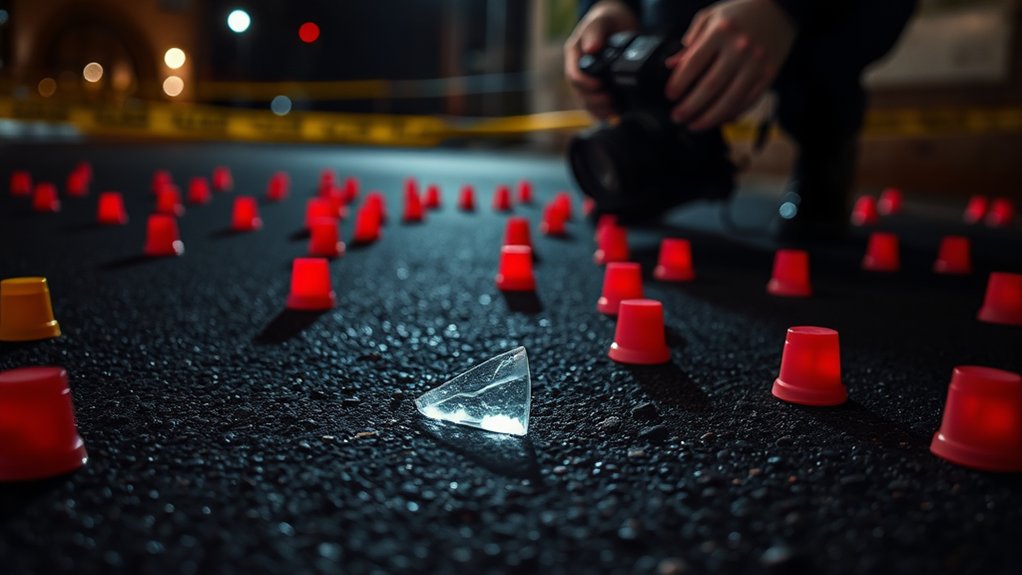
A properly maintained chain of custody requires you to complete detailed documentation forms recording every transfer, location, and individual who handles evidence from collection through storage and analysis. You'll need to implement strict transfer protocols that include tamper-evident seals, signed receipts, and contemporaneous logs to track the movement of evidence between authorized personnel and secured facilities. You must protect evidence integrity by storing items in appropriate environmental conditions with restricted access controls while maintaining thorough records of all storage activities and access events.
Documentation Requirements and Forms
Proper documentation of evidence begins with establishing an unbreakable chain of custody that tracks each item from collection through final disposition. You'll need to maintain detailed records that meet strict documentation standards to guarantee evidence admissibility and prevent legal implications that could compromise your case.
Essential forms you'll encounter include:
- Evidence collection sheets listing item descriptions, locations, and collection methods
- Chain of custody forms recording all transfers and storage locations
- Digital media logs tracking photos, videos, and electronic evidence
- Laboratory submission forms detailing requested analyses and results
You must complete each form accurately and promptly, using permanent ink and your signature with dates and times. Remember that incomplete or improperly completed documentation can result in evidence being ruled inadmissible in court proceedings.
Evidence Transfer Best Practices
Maintaining evidence integrity requires strict adherence to chain of custody protocols during every transfer between personnel, departments, or facilities. You'll need to document each transfer using standardized forms that track the evidence's movement, handling, and storage conditions.
When transferring evidence, you must implement contamination prevention measures by wearing appropriate PPE and using sealed, tamper-evident packaging. You'll record detailed information including date, time, location, item description, and the names of personnel involved in the transfer. Each receiving party must verify the evidence's condition and seal integrity before signing acceptance.
Store all evidence in secure, climate-controlled facilities with restricted access. You'll maintain digital and physical logs of every access instance, ensuring a complete, unbroken documentation trail from collection through final disposition.
Maintaining Integrity Through Storage
Storage protocols serve as the backbone of evidence integrity, requiring meticulous documentation and controlled access throughout an item's custody period. You'll need to implement evidence preservation techniques that maintain the original condition of each item while preventing cross-contamination.
Consider these storage environment considerations for ideal evidence protection:
- Temperature-controlled rooms with monitoring systems to prevent degradation of biological materials
- Tamper-evident packaging with unique identifiers and seals
- Dedicated storage units with restricted access and electronic logging
- Specialized containment for hazardous materials and volatile substances
You must maintain detailed records of every transfer, inspection, or analysis. Each interaction needs documentation of who, when, where, and why. This systematic approach guarantees your evidence remains admissible in court while preserving its probative value.
Advanced Forensic Technologies
Modern forensic science has revolutionized crime scene investigation through sophisticated technological advancements. You'll find that DNA profiling now enables investigators to identify suspects with unprecedented accuracy, while biometric analysis tools can match fingerprints, facial features, and other unique physical characteristics within minutes.
Today's crime scene technologies include 3D scanning systems that create precise digital reconstructions, advanced spectroscopy for chemical compound identification, and portable analytical devices that provide real-time results in the field. You can utilize automated comparison microscopes for ballistics analysis, cutting-edge imaging systems for evidence photography, and specialized software for blood spatter pattern analysis. These tools not only enhance the accuracy of evidence collection but also streamline the documentation process, making your investigative work more efficient and conclusive.
Crime Scene Reconstruction

When investigators piece together a crime scene, they rely on systematic reconstruction techniques to establish a detailed sequence of events. Through careful crime scene analysis and witness statements, you'll see how experts develop thorough timelines and spatial relationships between evidence items.
- Blood spatter patterns reveal directional force and impact angles
- Bullet trajectory rods demonstrate precise shooting angles
- Digital mapping software creates accurate 3D visualizations
- Physical evidence positioning shows movement patterns
You'll find that reconstruction methods combine forensic findings with eyewitness accounts to validate or challenge initial theories. This process helps you understand how the crime unfolded by connecting physical evidence to specific actions. With modern technology and traditional investigative techniques, you're able to establish a scientifically sound narrative that explains what happened before, during, and after the criminal event.
Common Contamination Risks
Maintaining crime scene integrity requires constant vigilance against contamination risks that can compromise evidence quality. You'll encounter numerous contamination sources, including footwear tracking in foreign materials, unauthorized personnel introducing DNA or trace evidence, and improper handling of items by first responders.
To implement effective prevention strategies, you must establish clear boundaries with crime scene tape, designate single entry/exit points, and maintain detailed entry logs. You'll need to require protective gear like booties, gloves, and suits for all authorized personnel. Environmental factors pose additional risks – wind can disperse trace evidence, while rain or snow may degrade biological samples. Managing these risks requires strict adherence to evidence collection protocols and proper documentation of any potential contamination events that could affect laboratory analysis.
Digital Evidence Processing

Digital evidence processing demands rigorous adherence to specialized protocols that preserve data integrity while preventing accidental modification. When you're handling cybercrime evidence, you'll need specialized digital forensics tools and write-blockers to create exact duplicates of storage devices. You must maintain detailed documentation of every step you take.
- You'll observe the flickering of LED indicators as write-blockers prevent data corruption
- You'll hear the gentle hum of forensic workstations processing massive data sets
- You'll watch as hash values validate the authenticity of your digital copies
- You'll monitor progress bars during the bit-by-bit imaging process
The chain of custody for digital evidence requires you to track every person who accesses the data, when they accessed it, and what actions they performed. Your documentation will become essential for establishing evidence admissibility in court.
Frequently Asked Questions
How Long Can DNA Evidence Remain Viable at an Outdoor Crime Scene?
You'll find DNA degradation varies considerably based on environmental factors. You can recover viable DNA from hours to several months outdoors, but you're most successful when collecting samples before exposure to heat, moisture, and UV light.
What Psychological Impact Does Crime Scene Investigation Have on Forensic Personnel?
Like walking through shadows of others' darkest moments, you'll need emotional resilience and stress management skills. You'll face trauma, disturbing scenes, and psychological strain that requires professional support and self-care strategies to maintain wellbeing.
Can Weather Conditions Affect the Accuracy of Blood Spatter Analysis?
You'll find that weather conditions greatly impact blood spatter analysis. Rain can dilute patterns, wind alters trajectory calculations, and temperature affects drying time, making your reconstruction of events less reliable without proper documentation.
How Do Investigators Determine the Difference Between Staged and Actual Crime Scenes?
You'll spot staged evidence through inconsistencies – blood patterns don't match stories, valuables aren't really stolen, forced entry looks deliberate. Investigators analyze these discrepancies to reveal when a crime scene's been manipulated.
What Percentage of Crime Scenes Yield Usable Evidence for Prosecution?
You'll find that evidence collection success varies widely, but research indicates roughly 30-40% of crime scenes produce prosecution-worthy evidence. That's why you'll see investigators meticulously document everything to maximize prosecution rates.
See The Next Blog Post About
You'll find that crime scene investigation demands unwavering precision and methodical attention. As you've explored the essential elements—from first response protocols to digital evidence processing—you've discovered how each step builds upon the last. What remains unseen, though, is how these components interweave to reveal the truth. Your mastery of these techniques will ultimately determine whether justice prevails or vital evidence slips away forever.


