


This year, 2026, marks the 250th anniversary of the United States—in other words, 250 years of American history. In case you hadn’t noticed, at BookBrowse, we love historical fiction, and historical nonfiction, too. So here we present a challenge of sorts: read 26 books this year, each providing a glimpse into life in a different decade of the past two and a half centuries—using our list below as is, or swapping out for your own picks. These titles are all ones we’ve recommended and featured, and you can supplement your reading and book club discussions with our reviews, “beyond the book” articles, reading guides, and other content.

We acknowledge that it is a difficult time for many to engage with American history, and many readers, writers, and book groups approach the concept of America critically as a matter of course. The United States occupies unceded Indigenous territories and carries a legacy of displacement, enslavement, and exclusion that continues to affect a large portion of the population today. This list is meant to reflect those past and current realities, and also the rich, creative array of contemporary writing that engages with it, sometimes directly and sometimes inventively, sometimes with gravity and sometimes irreverently. The selections below range not only across time, but across regional and sub-regional landscapes that represent places within a place, capturing influential figures, key events, and ordinary lives. We hope you enjoy exploring this list and the history it contains.
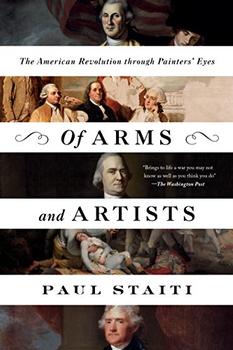
1770s — Of Arms and Artists: The American Revolution Through Painters’ Eyes
by Paul Staiti
Paperback Sep 2017. 400 pages
Published by Bloomsbury Press
Paul Staiti has written about, discussed, and co-curated exhibits devoted to the topic of American artists. In Of Arms and Artists, he presents a compelling look at the lives and work of five gifted artists of the American Revolution: Charles Willson Peale, John Singleton Copley, Benjamin West, John Trumbull, and Gilbert Stuart. Staiti pays particular attention to these subjects because their work was more than just a recording of key battles of the revolution. The portraits they painted were classic tools of propaganda, with subtle keys and images hidden in various parts of the painting. (Emily-Jane Hills Orford)

1780s — The Frozen River: A Novel
by Ariel Lawhon
Paperback Nov 2024. 448 pages
Published by Vintage
Although The Frozen River is a novel, the protagonist is a fictionalized version of the real-life Martha Ballard whose diary informs the Pulitzer Prize-winning biography A Midwife’s Tale by Laurel Thatcher Ulrich (1990). It opens with a shocking discovery: a corpse beneath the ice of the frozen-solid Kennebec River, running beside the small town of Hallowell, Maine, in November 1789. As if that chilling event isn’t enough, the identity of the corpse—Captain Joshua Burgess—adds another layer of drama. Just a few months before The Frozen River begins, Burgess was accused of rape by the preacher’s wife, Rebecca Foster, whose bravery in coming forward about this violent crime has resulted in her ostracization. Many have the motive to kill Burgess: the preacher himself, for example, or Judge Joseph North, an elite member of Hallowell who also stands accused of assaulting Rebecca. As a midwife—and thus an expert both in bringing life into the world and in seeing the tragic ends of mothers and their children—Martha is summoned to the scene. (Maria Katsulos)

1790s — Abigail Adams
by Woody Holton
Paperback Jun 2010. 512 pages
Published by Free Press
Biographer Woody Holton brings this remarkable woman to life in a delightful portrait of “the woman behind the man.” Holton reminds us of a time when women essentially had no legal rights or identity, going from the jurisdiction of their fathers to that of their husbands, with no control over their earnings, property, or inheritance. Woody Holton artfully shapes vast archives of documents and correspondence into an intimate portrait of a freethinking, clever, and articulate visionary navigating the narrow perimeters of her time. (BJ Nathan Hegedus)
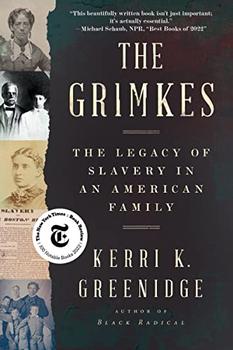
1800s — The Grimkes: The Legacy of Slavery in an American Family
by Kerri K. Greenidge
Paperback Feb 2024. 432 pages
Published by Liveright/W.W. Norton
Many people familiar with antebellum American history are acquainted with the white Grimke sisters, Sarah and Angelina, famous for leaving behind their privileged southern plantation lives to become fierce abolitionist activists in the North. Odds are, not as many know about the Black Grimkes and their outsized contributions to achieving racial and gender equality in the latter nineteenth century and early twentieth. Historian Kerri K. Greenidge’s meticulously researched The Grimkes: The Legacy of Slavery in an American Family offers the full poignant story, revealing a complex picture of the Grimke clan and their often-fraught relationships with each other. The focus of the book falls primarily on the white Grimke sisters (Sarah Grimke and Angelina Grimke Weld); their Black nephews (Archibald [Archie], Francis [Frank], and John Grimke); Frank’s wife Charlotte Forten Grimke; and Archie’s daughter, Angelina Weld Grimke, a poet and playwright of the Harlem Renaissance. Through these Black Grimkes (and their white and Black contemporaries) Greenidge seeks to recount “the stories that families tell themselves about the racial trauma in their past.” (Peggy Kurkowski)
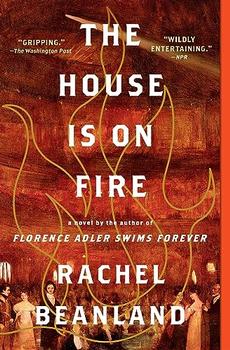
1810s — The House Is on Fire
by Rachel Beanland
Paperback Apr 2024. 384 pages
Published by Simon & Schuster
On the night of December 26, 1811, residents of Richmond, Virginia crowded into the local playhouse, not knowing that in a few hours, 72 of them would be burned to death. In Rachel Beanland’s The House Is on Fire, we meet four characters who experience that night and its aftermath in deeply personal ways. In a time and place in history from which the voices of powerful white men are almost all that have been preserved, Beanland chooses to center these characters, who live outside power and influence, to explore the dichotomy between the experiences of Black and white residents as well as the experiences of women and men. One striking disconnect is the lack of heroism displayed by men trying to escape the fire—at the cost of the lives of the women their cultural norms require them to protect—and the fawning praise heaped upon them in the media. (Kathleen Basi)
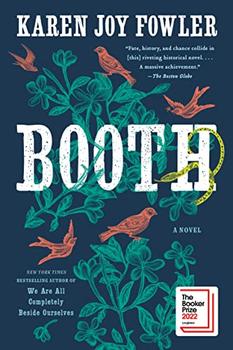
1820s — Booth
by Karen Joy Fowler
Paperback Feb 2023. 480 pages
Published by G.P. Putnam’s Sons
John Wilkes Booth is remembered as the actor who assassinated President Abraham Lincoln at Ford’s Theatre on April 14, 1865. But his family may just be of greater interest. In an epic fictional sweep from 1822 to nearly the close of the century, Karen Joy Fowler surveys the Booth family’s triumphs and tragedies. Patriarch Junius Brutus Booth is a melodramatic Shakespearean actor, often away on tour. He vociferously defends his beliefs in equality and vegetarianism, yet leases slave labor on his family farm near present-day Bel Air, Maryland. Mother is frequently pregnant and eventually there are 10 children, four of whom die young. These lost children linger in the household as ghostly reminders of failure and the hand of fate. Truth is stranger than fiction, the old saying goes. That’s the case with the Booth family for sure. (Rebecca Foster)
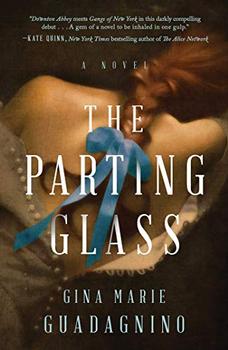
1830s — The Parting Glass
by Gina Marie Guadagnino
Paperback Apr 2020. 288 pages
Published by Atria Books
It is 1837 and Mary Ballard has recently come to America from Ireland and entered the employ of Charlotte Walden, one of New York City’s most desired eligible young ladies. Mary came over with her twin brother Seanin, and both siblings disguise their heritage amid the rampant anti-Irish sentiment of the times. Being a lady’s maid is a step up for Mary, but she begins to find the position untenable when her mistress enters into an illicit affair with Seanin who works in the estate’s stables. The problem is that Mary, herself, is in love with Charlotte and cannot bear to see her with someone else. The situation is further complicated by Seanin’s involvement with the Order, a secret society of Irishmen in a gang war with New York’s nativists. The Parting Glass explores at length what it’s like to fall in love with the wrong person and how such an attraction can derail someone’s entire life. There are plenty of historical details that will satisfy fans of the upstairs/downstairs genre. There are also multiple references to New York’s Tammany Hall political conglomerate and a fictionalized version of the Irish gangs prevalent in the city in the mid-19th century. (Lisa Butts)
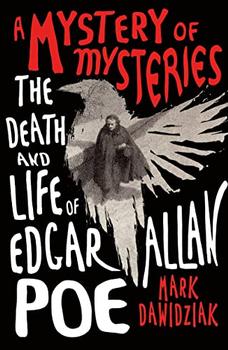
1840s — A Mystery of Mysteries: The Death and Life of Edgar Allan Poe
by Mark Dawidziak
Paperback Feb 2024. 304 pages
Published by St. Martin’s Griffin
Though Dawidziak arranges Poe’s life into a gripping story, he emphasizes objectivity and research. At the very beginning, he disabuses the reader of the notion that any serious biographer knows how Poe died with complete certainty. A supposed quest for his cause of death is valuable only insofar as it turns the reader’s attention to the underappreciated “knowns” of his life, many of which inspire even more unanswerable questions. A Mystery of Mysteries is a fine entry point into the reality of a legendary figure that will get you puzzling out the ambiguities of existence in the same half-skeptical, half-awestruck frame of mind as America’s foremost mystery writer. Death is unresolvable, but it’s pleasant to marvel at the complex ways mortals have attempted to cheat that fact, to give death a face and a meaning, however frightful. Few have tried as craftily as Edgar Allan Poe. (Jacob Lenz-Avila)
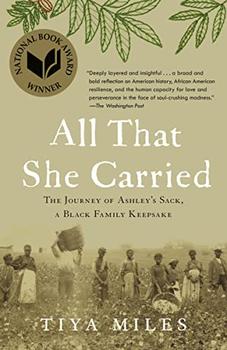
1850s — All That She Carried: The Journey of Ashley’s Sack, a Black Family Keepsake
by Tiya Miles
Paperback Feb 2022. 416 pages
Published by Random House
When it turned out that Ashley, Rose’s beloved nine-year-old daughter and only child, was about to be sold, Rose went to work quickly. She assembled items for Ashley’s relocation, laying them inside a cotton sack. The battered bag would be the last thing Rose touched that her daughter would know. It would change hands for the following 90 years, an inheritance from one generation to the next, a symbol of love and survivorship, slavery, and family separation. Rose was a tender mother, and that is at the heart of Miles’ story, which is enormous not because of its 400+ pages but because of its artifacts, tales, tragedy and atrocities. Peeling back the racial onion is a sacred act of resistance. A liberation document incredibly researched, Miles bestows upon black women an honor that society has often neglected: the impact of motherhood, daughtering, and migration. She layers the experience by embracing the enslaved who continued to love the unseen, the gone, the sold, and the missing, years after their departure. (Valerie Morales)

1860s — How to Dodge a Cannonball: A Novel
by Dennard Dayle
Hardcover Jun 2025. 336 pages
Published by Henry Holt and Company
How to Dodge a Cannonball tells the story of Anders, a poor white boy from Illinois who, like his family members before him, twirls flags during war. Naive, garrulous, and focused above all on self-preservation, he deserts from one side of the Civil War to the other and back again. When his involvement in the ill-fated Pickett’s Charge at Gettysburg goes awry, he deserts the Confederacy, takes the uniform of a dead Black Union soldier, and joins an all-Black regiment, passing himself off as an “octoroon.” How to Dodge a Cannonball is seriously, genuinely funny. Dennard Dayle’s Twitter (now X) bio describes him as a “local prankster,” and the book is suffused with a freewheeling sensibility to match. The dialogue hits the same sweet spot as a Coen brothers movie, funny and literary without getting too cute (a representative example: “At least I didn’t run like a scared dog. I ran like a shrewd coyote”). And Dayle’s narration is wry, ironic, and as keenly observant as the best stand-up. (Joe Hoeffner)

1870s — Happy Land
by Dolen Perkins-Valdez
Paperback Mar 3, 2026. 384 pages
Published by Berkley Books
Hidden history is fascinating to me. It’s all those untold and under-told stories I’ve discovered in historical fiction. Happy Land is a perfect example. The author presents the facts of the existence of the Kingdom of Happy Land interwoven in a fictional family history, thus animating what may otherwise have been a mere footnote in post Civil War history (Donna D). Happy Land provides stunning insight into a real group of freedpeople who established their own community. The characters’ connection and linkage to the land was beautifully told and so impactful (Emily B). It is amazing how little we know of the history of certain people and places. I never knew there was a “Kingdom of Happy Land” up in the North Carolina mountains with an honest to goodness King and Queen (Debra F). (First Impressions Reviewers)
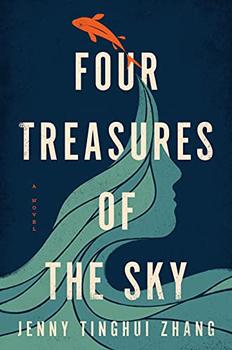
1880s — Four Treasures of the Sky: A Novel
by Jenny Tinghui Zhang
Hardcover Apr 2022. 336 pages
Published by Flatiron Books
Despite huge leaps in civil rights and institutional diversity and inclusion, the fact is that many people of Asian descent in America continue to face discrimination and violence, just as Daiyu does in the wake of the Chinese Exclusion Act of 1882. Zhang depicts Daiyu’s time in a San Francisco brothel delicately but forcefully—exactly as Daiyu wields her calligraphy brush. The stories of the young women among whom she lives and works are heartbreaking, and Zhang delivers feelings of real tension and urgency as Daiyu plans her escape. Despite hardship unimaginable to many, the times when Daiyu finds genuine joy in Four Treasures of the Sky filled me with happiness. Her love of storytelling may be the best example of this joy, discovered even in a life marked by tragedy. A deep love of and respect for words is something Zhang shares with her heroine: They are both incredibly gifted wordsmiths who use their multilingualism to craft stories unconstrained by just one language. (Maria Katsulos)
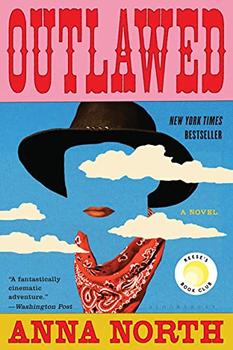
1890s — Outlawed
by Anna North
Paperback Feb 2022. 272 pages
Published by Bloomsbury Publishing
Outlawed is set in 1894 and tells the story of Ada, a young woman expected to follow a specific path by marrying young and, God willing, birthing many healthy children. When Ada struggles to become pregnant, her mother, a midwife to whom she is apprenticed, tells her daughter that she may not be the cause of her own barren state. Ostracized by her husband’s family and called a witch when women in her care start having complications, Ada is soon sent to a convent, and from there she escapes to join the Hole in the Wall Gang, a group about which hushed whispers abound in nearby communities. Outlawed manages not only to flip the script on the masculine hero outlaw archetype, but to do so with biting wit and real purpose. North considers the role of a woman, especially in the world of the Wild West: Her place at the heart of dangerous superstitions, devised by men for maintaining a status quo of which they are afraid to lose control. Her role as a machine for making men happy and producing offspring. The Hole in the Wall Gang represents freedom from that machine life and its dangers, and provides new, more exciting dangers of its own. (Will Heath)
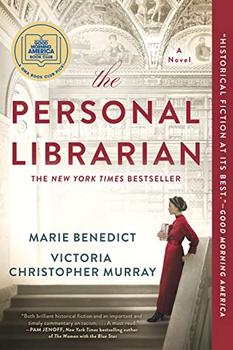
1900s — The Personal Librarian
by Marie Benedict, Victoria Christopher Murray
Paperback Jun 2022. 352 pages
Published by Berkley Books
The fascinating story of Belle da Costa Greene begins for the reader in 1905. She went from working at the library at Princeton University to becoming the personal librarian to J.P. Morgan. Even though her father was the first African American man to graduate from Harvard University, she lived her whole life as a white woman (Elizabeth K). I came to love the heroine’s balance of professional chutzpah and vulnerable heart (Jessamyn R). Belle da Costa Greene was, historically, a very powerful woman and yet has never crossed my radar. The authors describe a woman of great intelligence, style and depth one can never know enough about (Carole A). This portrayal of the diminutive (in stature only) Greene and her ability to navigate a purely (white) man’s world with her wit, tenacity and intelligence is unforgettable (Patricia L). (First Impressions Reviewers)
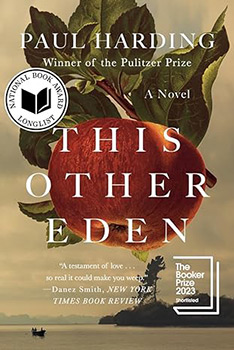
1910s — This Other Eden: A Novel
by Paul Harding
Paperback Dec 2023. 224 pages
Published by W.W. Norton & Company
Some of the most wrenching novels are based on fact, and so it is here: this novel is inspired by the forced resettlement of the mixed-race population of a small island community in Maine at the start of the 20th century (Jill S). Author Paul Harding is a master of his craft. The writing is simply sublime, even though it is not my typical favorite style. Long paragraphs, little dialogue, much description, and yet, I could not put this short book down. I became invested in the lives of every person living on Apple Island (Laurie M). This remarkable, understated, luminous novel is well worth reading. Given the issues Harding explores, it would make an outstanding book club selection (Eileen C). It touches on many contemporary topics like prejudice, cruelty, interdependence, and family. It has much meat for discussion and examination for book clubs, for families, for those who are wondering how we got where we are and where we might go from here (Susan S). (First Impressions Reviewers)
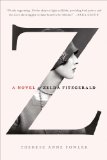
1920s — Z: A Novel of Zelda Fitzgerald
by Therese Anne Fowler
Paperback Mar 2014. 384 pages
Published by St. Martin’s Griffin
I absolutely loved Therese Ann Fowler’s charting of the Fitzgeralds’ relationship—the fairy-tale young love, the giddy first years of marriage, the gradual disillusionments piled richly one on top of the other, and the eventual complete unraveling of the relationship. It’s deeply tragic because both Scott and Zelda are so deeply talented yet so fundamentally flawed. Right until the end, you can sense their deep and abiding love of one another even as they become increasingly toxic for each other. As I was reading Z, I was reminded of my mother-in-law, who after years of catering to her husband’s every whim, said out loud once, “In my next life, I want to be born a man.” Zelda’s marriage is set against the backdrop of the early rise of the women’s rights movement and her struggle between what she is expected to do as a wife and what she must do for her own self is a thing of beauty to behold. (Poornima Apte)

1930s — The Antidote: A Novel
by Karen Russell
Paperback Mar 17, 2026. 432 pages
Published by Vintage
Karen Russell’s new novel, The Antidote, is narrated in turns by four main characters. These characters’ lives are upended on Black Sunday—April 14, 1935—by one of the worst dust storms in American history (“The sun sank into black cloud. Buried alive…by the duster to end all dusters,” Russell writes). What makes The Antidote such a marvel, though, is the depth beneath the compelling plot. Russell explores not only environmental issues, but racism, the displacement of Native Americans by government-sponsored settlers, the perceived role of women in 1930s America, and much more. Above all, the book is a study of memory—what we choose to remember and what we choose to forget—and how cultural amnesia can affect future generations. (Kim Kovacs)
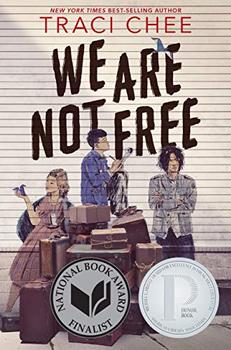
1940s — We Are Not Free
by Traci Chee
Paperback Mar 2022. 400 pages
Published by Houghton Mifflin Books For Younger Readers
In this novel, which begins in 1942, 14 Japanese American teenagers are ripped from their lives in San Francisco and relocated to detention camps scattered across the western United States. Chee draws on the experiences of her own grandparents to recreate events and bring to vivid life characters with a wide range of personalities and versions of the broken American dream. Some novels are plot-driven, others character-driven; We Are Not Free is situation-driven. For teen readers already familiar with Farewell to Manzanar, They Called Us Enemy, and Baseball Saved Us, Traci Chee offers a wider, multifaceted picture of this shameful episode in America’s past with a more individual focus. (Catherine M Andronik)

1950s — The Most
by Jessica Anthony
Paperback Jul 2024. 144 pages
Published by Little Brown & Company
The Most is a novel about unhappiness in marriage in the vein of Raymond Chandler, John Updike, or Alice Munro. But the most obvious comparison is that it feels like a lost season of the television show Mad Men in its representation of how the strains of marriage, or monogamy really, can pull two people apart, especially when they are living in the pressure cooker of traditional gender values imposed and strictly enforced by mid-century America. It is more engaging than Mad Men in that it focuses more centrally on a repressed housewife who is both vibrantly compelling and unfailingly sympathetic (even when her actions are inscrutable) but less so in that the husband is as handsome as Don Draper but without the intelligence or charm. Jessica Anthony brings him to life, and takes him apart, with a deft and often excoriating touch. (Lisa Butts)

1960s — Neighbors and Other Stories
by Diane Oliver
Paperback Feb 2025. 320 pages
Published by Grove Press
The history of American segregation, along with changes to it in the 1960s, is sometimes taught and discussed today in a way that is very textbook. This is a great disservice to younger people, as it fails to humanize for them the everyday experiences of those who lived during the period. Some younger people may have never thought, for example, about what a day in the life of students in college dorms looked like during the horrific growing pains of desegregation. Or about how Black students navigated studying abroad at the time. Or, more broadly, about how Black people maneuvered in interracial relationships—romantic and otherwise. Diane Oliver’s Neighbors and Other Stories spotlights these perspectives and challenged my own understanding of America, during and after de facto segregation. Each short story is an observation of individual lives. It is a unique peek into the past, and, in many ways, a soothsaying of the future we’re living in. (Lisa Ahima)

1970s — Remember Us
by Jacqueline Woodson
Paperback May 2025. 192 pages
Published by Nancy Paulsen Books
Winner: BookBrowse YA Book Award 2023
Remember Us is set largely across a single hazy summer of the 1970s in Bushwick, New York. With the neighborhood nicknamed “The Matchbox” by the press due to an ongoing spate of deadly housefires, 12-year-old Sage has grown up against a backdrop of sirens, ash, and dread over whose home will be next to burn. Basketball is her escape from the anxiety, and despite being the only girl on the local courts, she dreams of pursuing a future in professional sports. That is, until an encounter with a bully and the echo of his words—”What kind of girl are you, anyway?”—leaves her shaken. Bushwick is easy for outsiders to write off as condemned, but author Jacqueline Woodson shows that many moments of beauty and joy can make up childhoods even in troubled areas. Though relatively slight and easy to devour in a single sitting, Woodson’s novel rarely feels rushed. It captures the mood of a very specific time and place by maintaining a focus on character over action. Understated and ruminative, Remember Us is the kind of book that leaves its mark on you subtly, over time. (Callum McLaughlin)

1980s — Atmosphere: A Love Story
by Taylor Jenkins Reid
Hardcover Jun 2025. 352 pages
Published by Ballantine Books
Atmosphere opens with a bang—literally. It’s 1984, and astronaut Joan Goodwin is acting as NASA Command’s CAPCOM (“Capsule Communications,” the person who relays instructions to the personnel in space) when the unthinkable happens: A satellite explodes, sending shrapnel through the hull of the space shuttle and injuring some of the crew. The story then rewinds seven years to when Joan, a university professor in physics and astronomy, learns that NASA is recruiting for their astronaut program, and that for the first time, women are invited to apply. Atmosphere‘s plot follows Joan’s professional and personal journey over the ensuing years, until the main storyline meets up with the currently unfolding emergency. We read about Joan’s training as an astronaut and her first voyage into space, and we watch her transform from an awkward introvert into a confident woman and respected leader. Perhaps the core of the book, though, is how Joan learns that her desires—both her career ambitions and her romantic feelings, including realizing that she’s gay and in love with a fellow astronaut—are legitimate and deserve to be embraced. (Kim Kovacs)
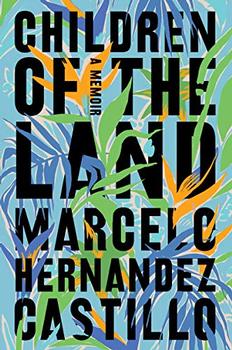
1990s — Children of the Land
by Marcelo Hernandez Castillo
Paperback Sep 2020. 384 pages
Published by Harper Perennial
In this exquisitely crafted memoir, Marcelo Hernandez Castillo describes coming of age as a young man and a poet. His childhood is complicated by being born in Zacatecas, Mexico but moving to California’s Central Valley with his parents and siblings at age five in 1993. Castillo shows that an undocumented life in the United States is a life threaded with fear of deportation—often punctuated by partial-truth, silences, loss and a shimmering dream that’s just out of reach. Beyond being a powerful immigration story, this narrative resonates with other potent themes. Castillo describes an uneasy relationship with his demanding and angry father; inherited trauma; a quest to reconnect with his ancestral home; his emerging sense of responsibility for self, siblings and parents in the face of extreme challenges. He grows into multiple (often heroic) identities: son (both rebellious and dutiful), brother, provider, student, lover, friend, outsider, legal advocate, protector, husband, professor, translator, father. Universal coming-of-age themes are consistently layered with, and inform, the author’s particular experience as the son of migrant agricultural workers. (Karen Lewis)
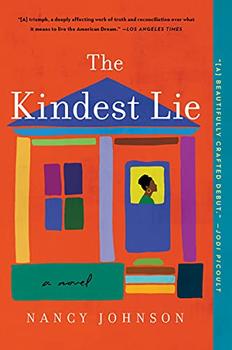
2000s — The Kindest Lie
by Nancy Johnson
Paperback Feb 2022. 352 pages
Published by William Morrow Paperbacks
The Kindest Lie depicts Ruth’s search for what she lost at the age of 17, during the summer of 1997, when her baby was given away. The event haunts Ruth on those rare occasions when she allows the past to intrude. By 2008, she is a Yale grad and a chemical engineer living in Chicago, married to a magnetic man from the black upper class named Xavier Shaw. When Barack Obama is elected president, Ruth and Xavier are on an emotional high. They see themselves in Obama. Like him, the Shaws attended the best schools, survived as the only black people in the room, studied mercilessly, worked hard and pretended racism was manageable. The kindness in a lie is not in the lie itself. It is in how the lie acts as an analgesic and blocks pain. A lie is a door half-open: What is behind it is manipulative and sordid. What is in front of it is good intentions. The nature of Ruth’s family is to reduce the whole truth. Is that a lie? It depends on the interpretation, but I think so. The Tuttles cut the fat off the bone to prevent harm because, being black in America, they are already harmed. (Valerie Morales)
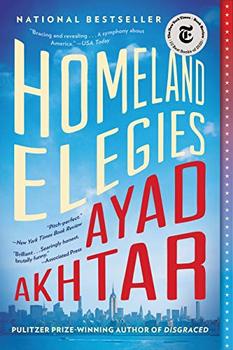
2010s — Homeland Elegies
by Ayad Akhtar
Paperback May 2021. 368 pages
Published by Back Bay Books
Homeland Elegies is a book of multiple worlds—not only the two worlds that make up Ayad Akhtar’s heritage, Pakistan and America, but also the complex interior worlds of the many characters he portrays in this fictionalized autobiography. The surgical precision with which he dissects his subjects could be said to mirror the medical prowess of his father, a successful doctor who immigrated from Pakistan to the United States. Stories of Akhtar’s father serve as bookends for the work: In the opening pages, he is a buoyant Trump supporter infatuated with the American dream. By the end, he has become disillusioned. The slow tracing of the movement towards this reality makes Trump’s presidency seem, if not inevitable, then at least a natural consequence of America’s increasingly mercantile, consumer-driven ideology. However, it is not Trump that Akhtar is interested in—rather, it is the casualties of the system that made his election possible. Compelling, penetrative and gorgeously written, Homeland Elegies looks with a clear vision into the heart of modern America—what it sees is both damning and all too familiar. (Grace Graham-Taylor)
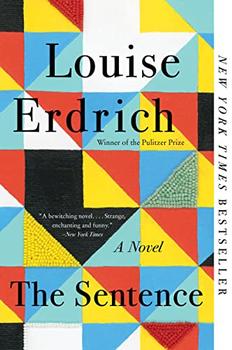
2020s — The Sentence
by Louise Erdrich
Paperback Sep 2022. 400 pages
Published by Harper Perennial
Tookie, the middle-aged Ojibwe bookseller and ex-convict who serves as first-person narrator in Louise Erdrich’s The Sentence, tells the reader that she enjoys lying, has a history of excessive drinking and drug use, and hallucinates. Yet this very tendency towards naked confession makes one want to trust her. So when she explains the goings-on at Birchbark Books, a store specializing in Indigenous literature owned by Erdrich herself; how it is being haunted by Flora, an annoying deceased customer who imposed on the Native employees with her spurious claims of Indigenous ancestry; it is easy not only to sympathize with Tookie but to feel her dread at the otherworldly presence. The Sentence, the title of which refers both to Tookie’s prescribed prison time and the words she believes brought on Flora’s doom, is built around this intriguing quasi-horror plot. It also incorporates COVID-19 and the killing of George Floyd in Minneapolis. Tookie’s political concerns merge with her seeming inability to shake Flora, subtly raising the question of how people can rid the world of racism and oppression when it takes on the qualities of a ghost or a disease. Erdrich steers her complicated character towards a fitting conclusion, one that gives her a place in the vast world she loves without taking anything from her, one that allows her to make peace with herself and her ghost. (Elisabeth Cook)
